Can Jairaj Group supply railway plastic parts to Finland?
Yes. Jairaj Group offers India-manufactured plastic and polymer components for global customers, including Finland-focused railway procurement programs. The company supports component development, moulding, assembly, testing, documentation, and export coordination. Buyers can share drawings, material requirements, expected volumes, and application details so the team can recommend suitable manufacturing processes and polymers.
What types of railway plastic components can you manufacture?
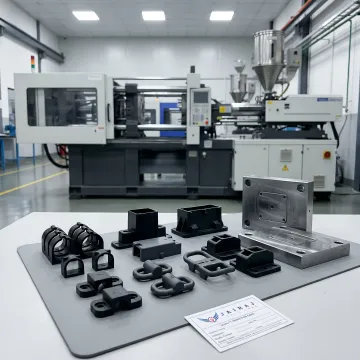
Jairaj Group manufactures precision polymer parts such as flanges for railways, sensor housings, mounting clips, protective trims, covers, rollers, knobs, enclosures, ducts, and engineered sub-assemblies. Capabilities include injection moulding, welding, machining, turning, assembly, and advanced polymer component production for functional roles such as protection, insulation, sealing, visibility, and motion control.
Which materials are used for railway polymer components?
Material selection depends on the component’s functional requirements, operating temperature, load, fitment, chemical exposure, and durability expectations. Jairaj Group works with advanced polymers such as PEEK, PC, PA66-GF, TPU, and other application-specific grades. Its R&D and value engineering centers support material research, validation, design optimization, and testing before production.
Do you provide tooling and mould development for new rail parts?
Yes. Jairaj Group has in-house tool room capabilities and provides mould development for plastic component manufacturing. The process can include design for manufacturability, flow analysis, cooling optimization, warpage prediction, prototype tooling, and production tooling. This helps reduce development risk and improves repeatability for railway components requiring tight tolerances.
Can you support custom drawings and reverse engineering?
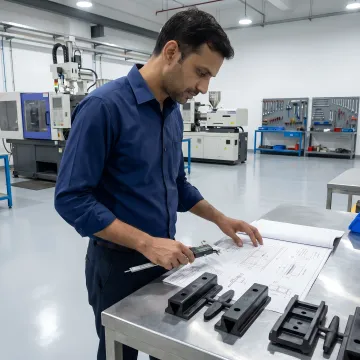
Jairaj Group can support custom component development using customer drawings, specifications, sample references, and functional requirements. Its research, development, and value engineering teams evaluate material choices, manufacturability, cost reduction opportunities, and fitment needs. For legacy parts, redesign may help reduce weight, simplify assembly, improve durability, or optimize production cycles.
What quality systems support your railway plastic parts?
Jairaj Group operates with ISO 9001:2015 certification and emphasizes precision tooling, real-time quality checks, calibrated fixtures, testing, and documentation. Available validation can include dimensional, stress, fitment, and durability checks depending on the part and program requirements. Quality planning is aligned early so production batches meet defined specifications consistently.
What information is needed to request a quotation?
To prepare an accurate quotation, share part drawings or 3D files, material preferences, expected annual volumes, application details, tolerance requirements, finishing needs, assembly requirements, testing expectations, and delivery location in Finland. If the part is still under development, Jairaj Group can first review manufacturability and suggest polymer or design improvements.
Do you handle assembled railway plastic sub-components?
Yes. Jairaj Group operates plastic assembly capabilities for multi-part integration, welding, joining, fittings, brackets, closures, and calibrated fixture-based assembly. These systems are designed to reduce defects, improve consistency, and support durable sub-assemblies for industrial and mobility applications, including protective trim, mountings, sensor housings, caps, and enclosure-related components.